
A large share of London homes are leasehold flats, in converted houses, mansion blocks and purpose-built blocks. Improving a flat’s energy performance is possible, but some decisions are not yours alone. Before commissioning work, it helps to know who owns what and whose permission you need.
Start with your lease
Your lease sets out which parts of the building you own and what alterations you may make. There is no standard split: in some leases the flat includes the windows and the inner face of external walls; in others the freeholder retains the whole structure. The Leasehold Advisory Service explains that the lease may require the landlord’s written consent for alterations, that work without consent can be a breach of the lease, and that a landlord may charge fees for considering an application.
- Check which parts are demised to you – walls, windows, floors, ceilings, roof.
- Check whether alterations need consent and whether any are prohibited.
- Ask the freeholder or managing agent early, before paying for detailed design.
Planning permission
Flats do not have the householder permitted development rights that houses have, so external changes such as external wall insulation generally need planning permission. Listed buildings need listed building consent, and conservation area or Article 4 controls may also apply.
Higher-risk buildings
Under the Building Safety Act 2022, a higher-risk building is one that is at least 18 metres high or has at least seven storeys and contains at least two residential units. Building work in an existing higher-risk building generally needs building control approval from the Building Safety Regulator before work starts, subject to exemptions such as some work done under competent person schemes. Work affecting fire safety, escape routes, common parts or the external wall is treated as more significant.
Leasehold reform
The Leasehold and Freehold Reform Act 2024 is being brought into force in stages. The Leasehold Advisory Service reports that the two-year wait before extending a lease or buying the freehold has been removed, while many other reforms do not yet have a commencement date. The Act does not directly change the need for landlord consent to alterations.
Measures that usually stay within the flat
- Draught-proofing doors and windows you own
- Secondary glazing, where the lease and any listing allow
- Insulating floors or ceilings within your demise, with care over shared voids
- Improving heating controls and ventilation within the flat
Working with neighbours
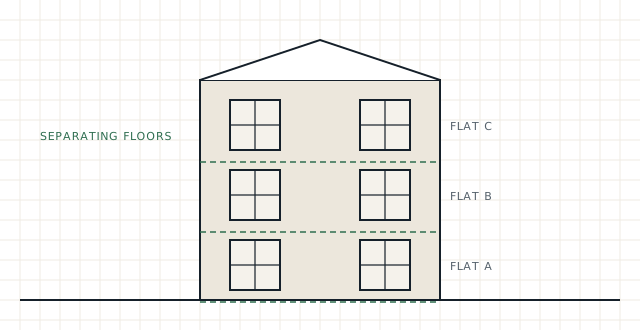
In converted houses, upper and lower flats share floors and walls. Some measures work better, or only work, when owners coordinate – for example insulating a suspended ground floor, or treating a whole external wall. A retrofit coordinator can help plan works so that one flat’s improvement does not create problems for another.
This guide is general information, not legal advice. For questions about your lease, contact the Leasehold Advisory Service or a solicitor.
Need help with your property? We help leaseholders and freeholders plan retrofit that respects shared responsibilities.
Sources and further reading
- Leasehold Advisory Service – alterations and home improvements
- Leasehold Advisory Service – leasehold reforms
- Building control approval for higher-risk buildings (GOV.UK)
- Permitted development rights for householders: technical guidance (GOV.UK)
This guide is general information, not advice for a specific property. Standards and scheme rules change; check the current version before relying on them.